
Interactive product
Five parts.
One base.
Drag to rotate. Open a numbered part for the full explanation and its evidence status.
01The five components
Every part,and what we know about it.
- 01
Raised support platform
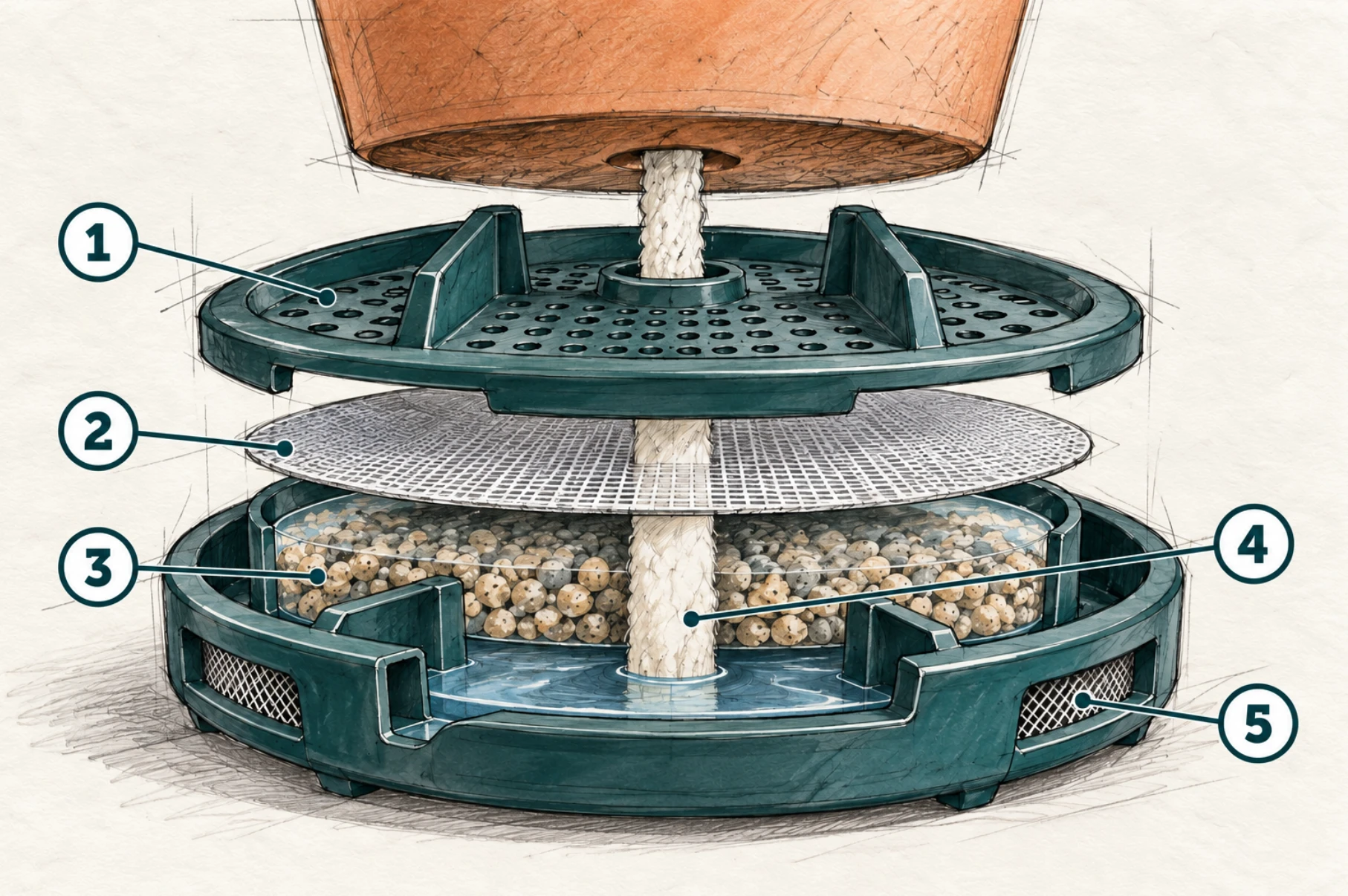
The pot sits on this perforated platform instead of an open saucer. Drainage passes straight through the holes and below the barrier. The physical prototype showed the layout working: it carried a loaded pot and kept drainage contained in a basic demonstration.
Demonstrated in prototype layout - 02
Mosquito-blocking mesh
A fine mesh sits between the platform and the water. Together with sealed edges, it is meant to stop an adult mosquito reaching the stored water. Whether it actually does has not been tested. That needs a controlled protocol and independent review.
Proposed - 03
Mineral storage layer
A bed of mineral pebbles sits in the reservoir. The idea is to hold drainage down low and break up the open waterline that a plain saucer leaves behind. It appears in the concept design and the prototype, but its effect has not been measured.
Concept component - 04
Capillary wick
A fabric wick runs from the reservoir up through the drainage hole into the soil. As the soil dries, capillary action may pull some stored water back up to the roots. How well this works, and for which plants, still has to be tested.
Proposed - 05
Screened overflow
During heavy watering, excess water needs somewhere to go. Screened side outlets are meant to let it out while keeping the barrier intact. Overflow, blockage and debris are all part of the bench-testing plan.
Proposed
02Three system states
Normal use, construction,and the intended water path.
The base sits under the pot you already own. Drainage leaves the pot and goes straight down, not into an open saucer.
Five parts stack vertically: platform, mesh, mineral storage, wick and the reservoir with its screened overflow.
Catch, Separate, Return, Release. The last three steps are proposed and still need bench testing.
03From sketch to prototype
Drawn, then builton a real balcony.
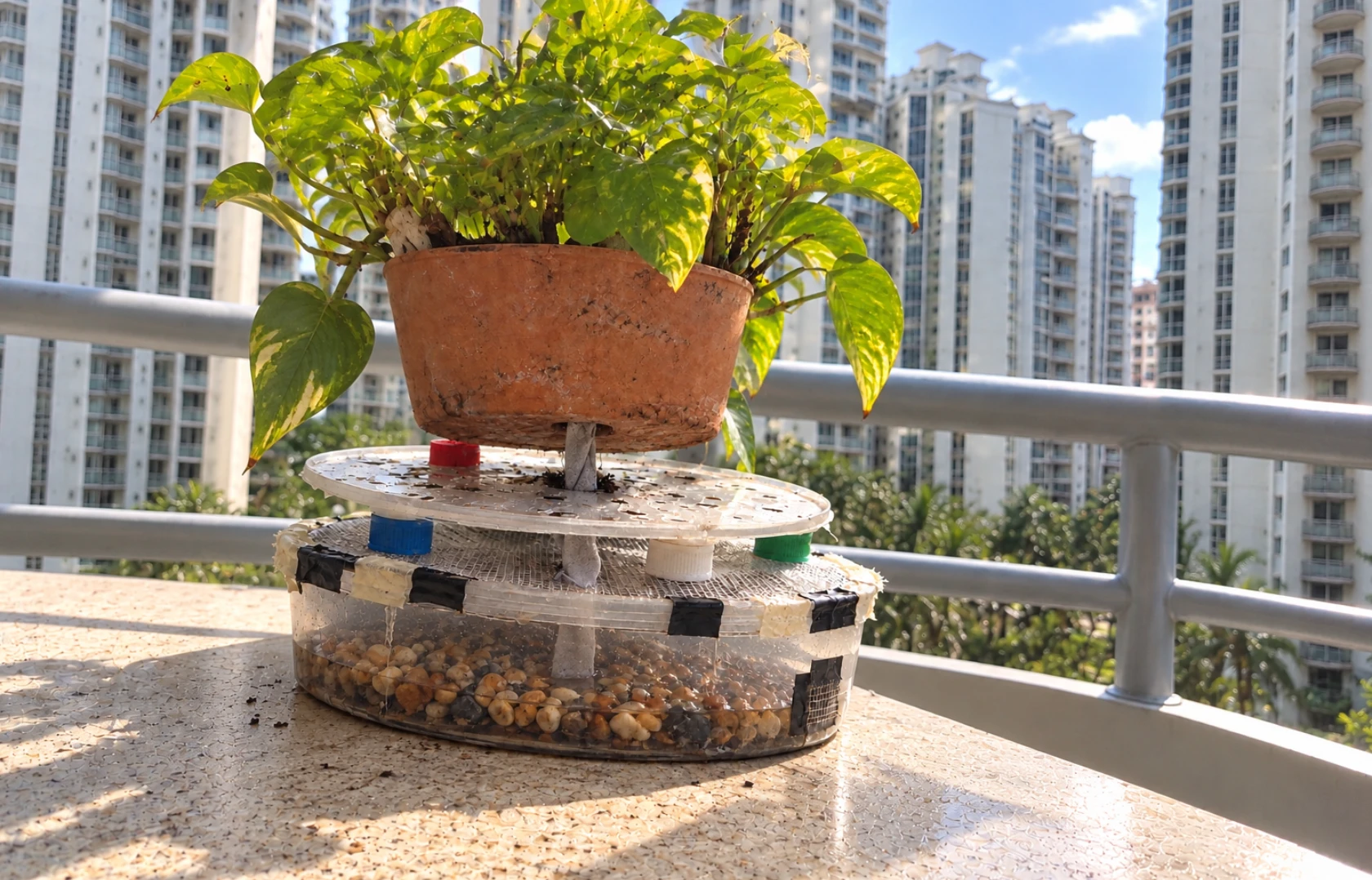
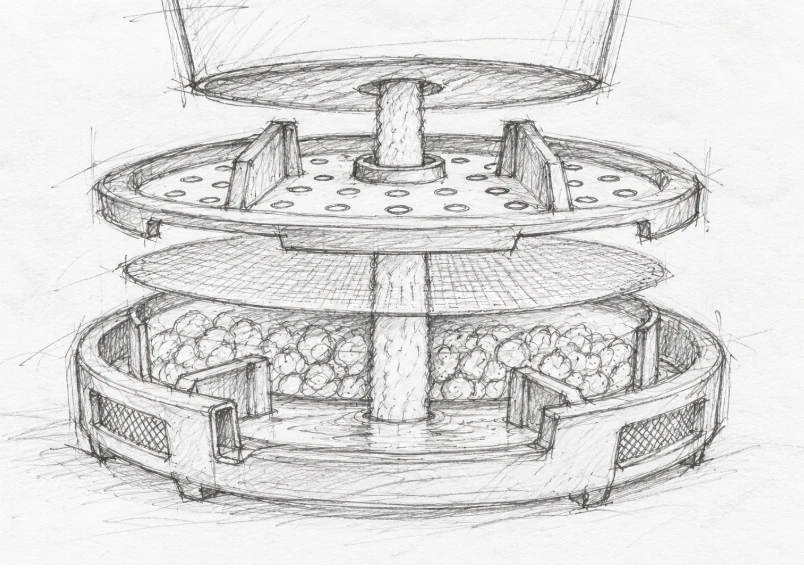
The design goal is to keep the pot you already own. Final compatibility and size coverage still need fit testing, and interviewees asked for a flatter, smaller version.
The prototype demonstrated assembly, pot support and contained drainage. It did not demonstrate mosquito exclusion, reliable capillary return, long-term plant health, safe overflow, durability, cleanability or final cost. Testing plan